
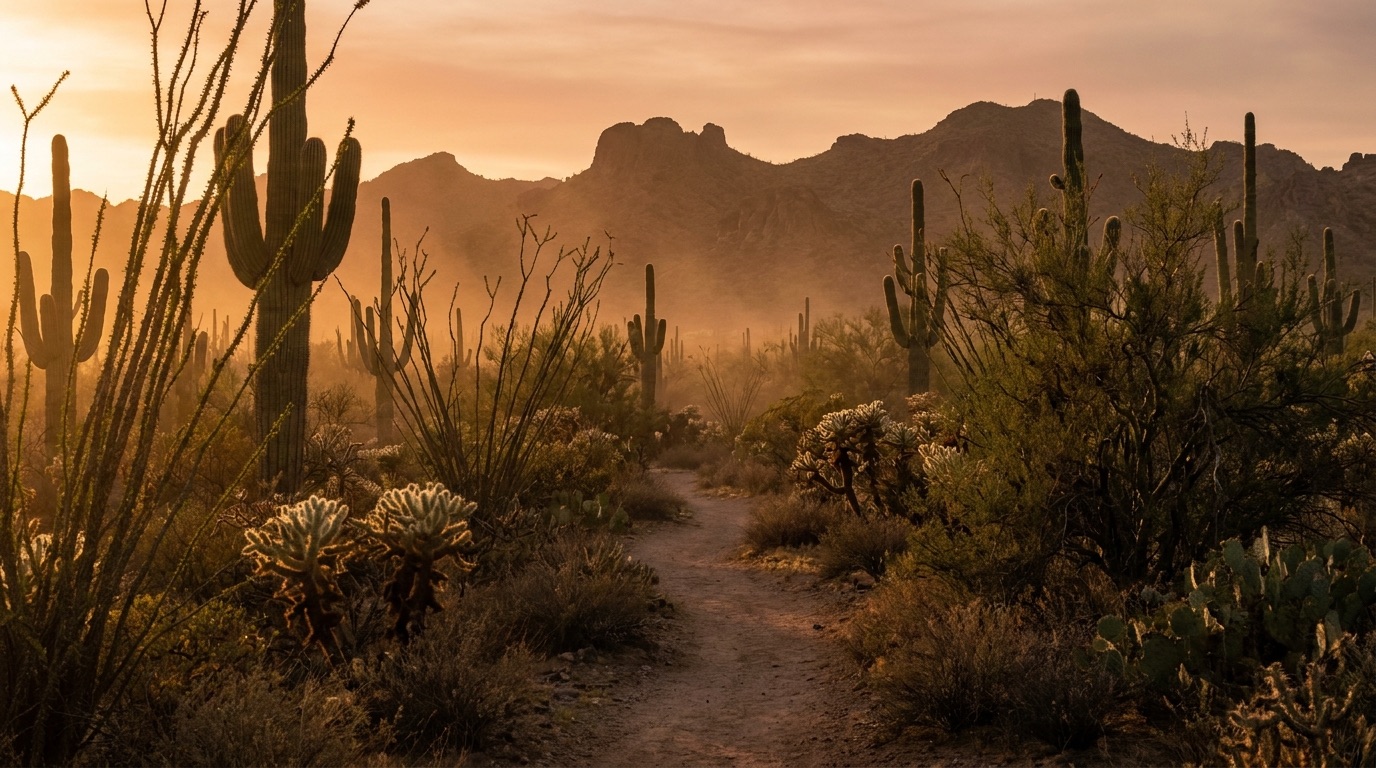
Phoenix monsoon season runs from June 15 through September 30 — those are fixed calendar dates set by the National Weather Service, not a forecast, which is why locals start talking about it in June whether or not a single cloud has shown up. What the season actually describes is a seasonal shift in wind direction that pulls moisture into Arizona, and what that moisture does when it hits a desert that has spent three months baking. Some years it delivers spectacular storms and half the summer's rain. Some years it mostly delivers humidity and disappointment. Either way, the storms it does produce are the most destructive weather the Valley gets, and almost all of the damage is preventable.
What a monsoon storm actually does
The pattern is usually an afternoon one. Storms build over the higher terrain east and north of the Valley, then push down into Phoenix in the late afternoon and evening, often arriving with wind long before they arrive with rain. That gap is the part newcomers underestimate.
Three things do the real damage. The first is the dust storm — the wall of blowing dust that gets called a haboob, which can drop visibility on a freeway to nothing in under a minute. The second is the microburst: a violent column of air that slams down out of a collapsing storm and spreads out as straight-line wind at the surface. Microbursts are why you wake up to snapped palm trees, flipped patio furniture, peeled roof tiles, and neighborhood-wide power outages after a storm that lasted twenty minutes. The third is flash flooding, which is dangerous precisely because it doesn't require rain where you are standing. Desert soil sheds water instead of absorbing it, so a storm over the mountains can send water down a dry wash miles away, under a sky that looks perfectly fine.
Driving in it: the two rules that matter
If a dust storm overtakes you while you're driving, Arizona's official guidance is *Pull Aside, Stay Alive*. Slow down, exit the roadway if you safely can, and pull as far off the pavement as possible. Then do the part people get wrong: put the vehicle in park, take your foot off the brake, and turn all your lights off. Drivers in near-zero visibility instinctively follow taillights, and a lit-up car parked on the shoulder is what they'll steer into. Lights off, seatbelt on, wait it out.
The second rule is *Turn Around, Don't Drown*, and Arizona backs it with a law. Under the state statute widely known as the Stupid Motorist Law, a driver who goes around a barricade into a flooded roadway and has to be rescued can be held liable for the cost of that rescue. Beyond the money, the physics are unforgiving — moving water is far stronger than it looks, and a dip that looks like a puddle can be a running wash with no visible bottom. Every year the Valley runs swiftwater rescues for people who were sure their truck could make it.
The home prep list (do it before the season, not during)
Most monsoon repair calls trace back to something that was already loose or already worn before the first storm. A short list covers the majority of it.
Trim your trees. Overgrown, top-heavy trees and unskirted palms are the number-one thing that comes down in a microburst, usually onto a roof, a fence, or a car. Get this done early in the season, not after the first storm when every crew in the Valley is booked for three weeks.
Clear the water's path. Check roof drains, scuppers, and gutters for the dust and debris that collect all spring, and confirm your yard still drains away from the house rather than toward it. An inch of rain in fifteen minutes finds every blocked outlet you have.
Look at the roof before it leaks. Lifted or cracked tiles, worn flashing, and sun-brittled seals are what turn wind-driven rain into a ceiling stain. It's much cheaper to have a roofer look in May than to find out in August — and our guide to choosing a roofer in Phoenix covers the questions to ask before anyone gets on your roof.
Service the AC. Monsoon season stacks humidity and power fluctuations on top of already brutal heat, which is exactly when tired systems quit. If yours hasn't been serviced this year, do it now — see how to choose an HVAC company in Phoenix.
Secure the loose stuff and prep for an outage. Patio umbrellas, cushions, trampolines, and empty trash bins become projectiles. Know where your electrical panel and main water shutoff are, keep flashlights and drinking water on hand, and expect that a serious storm can take power out for hours. Also worth a look: the garage door, which is the largest wind-facing surface on most Phoenix houses and the one people never think about until it's flexing.
After the storm: watch for the trucks that show up uninvited
The day after a big monsoon storm, the door-knockers arrive. Some are legitimate crews working a hard-hit neighborhood; some are out-of-state storm chasers who will take a deposit, do fast cosmetic work, and be gone before the next season. The defenses are simple and they don't change: verify the contractor's license with the Arizona Registrar of Contractors, get the scope and price in writing before any work starts, never pay the full job up front in cash, and take your own photos of the damage before anyone touches it. Involve your insurer early rather than letting a stranger define the claim for you. Our guide to vetting a home service pro in Arizona walks through the whole checklist.
The bottom line
Monsoon season is the price the Valley pays for the rest of the year, and honestly it's a fair trade — the storms are the most dramatic weather Phoenix gets, and the evenings after them are some of the best. Treat it the way locals do: prep the house in June, respect the dust and the water when you're behind the wheel, and don't hire the first truck that pulls into your driveway. Do that and it's a spectator sport. Skip it and it's a deductible. For the rest of the season, our guide to things to do in Phoenix this summer is built around the same heat-and-timing logic.
Know a Phoenix-area roofer, tree service, HVAC crew, or restoration company that does right by people after a storm? Nominate them to be featured — the businesses that show up honestly in a bad week are exactly the ones we want on this site.