
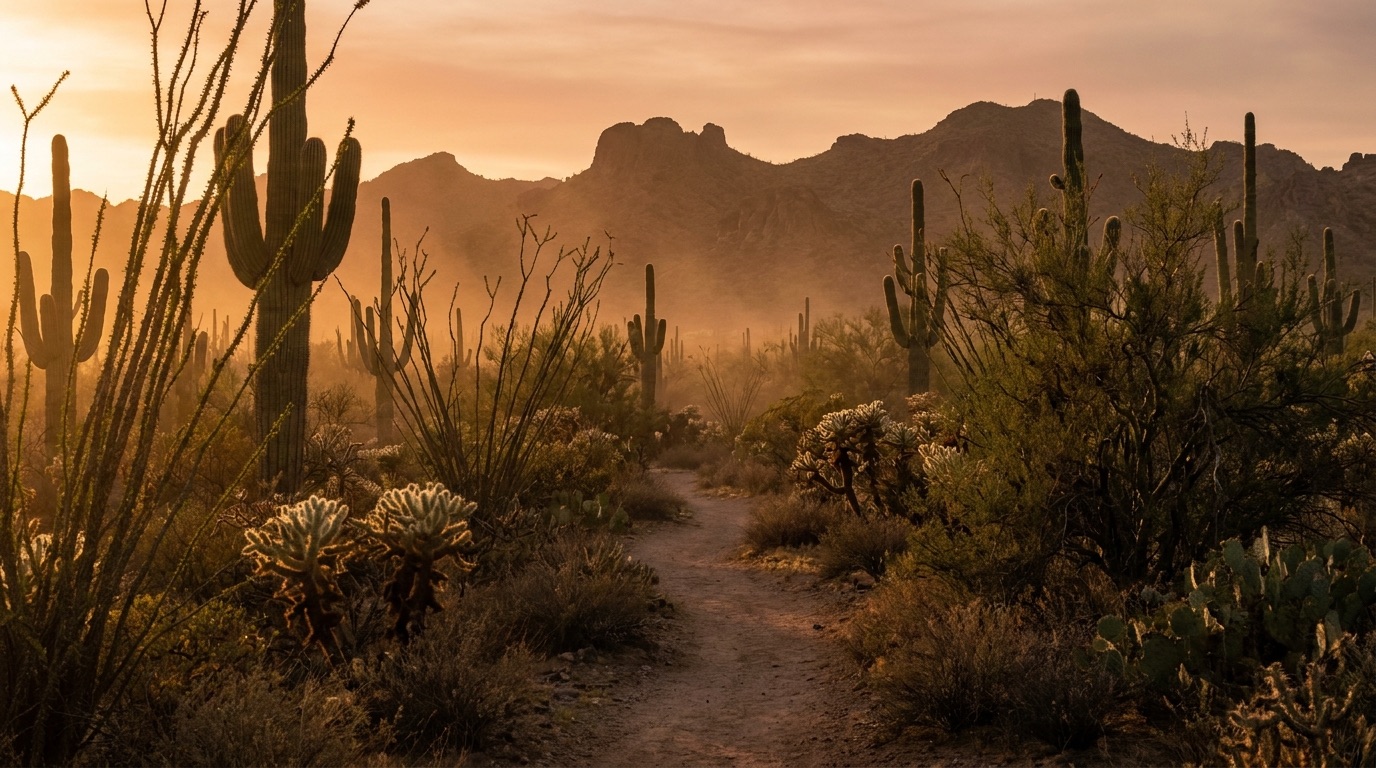
Moving to Phoenix is easy. Living here well takes about a year, and almost nobody tells you the specific ways it's different — because most of what's written about moving to Phoenix is written by someone trying to sell you a house, or by a national site that has never spent a July here.
We write about Phoenix businesses for a living, which means the people we talk to are the ones you'll eventually be calling: the AC techs, the roofers, the shop owners, the trainers. That's a strange but useful vantage point on a city. You learn very quickly which newcomer mistakes are universal, and almost all of them trace back to one thing.
The calendar here runs backwards
Everywhere else, winter is the season you hide from and summer is the season you live in. Phoenix inverts that completely, and it is the single most important thing to understand before you arrive.
From roughly October through April, this is one of the best places in the country to be outside. Seventy degrees and cloudless for months. Patios full, trails busy, every event outdoors, people genuinely happy to be here.
From roughly May through September, the middle of the day belongs to the sun. Life doesn't stop — it moves. Hikes happen at 5:30 a.m. Kids' birthday parties happen indoors or after dark. Errands get batched so you're not in and out of a hot car six times. Dinner on a patio is a 9 p.m. activity, not a 6 p.m. one.
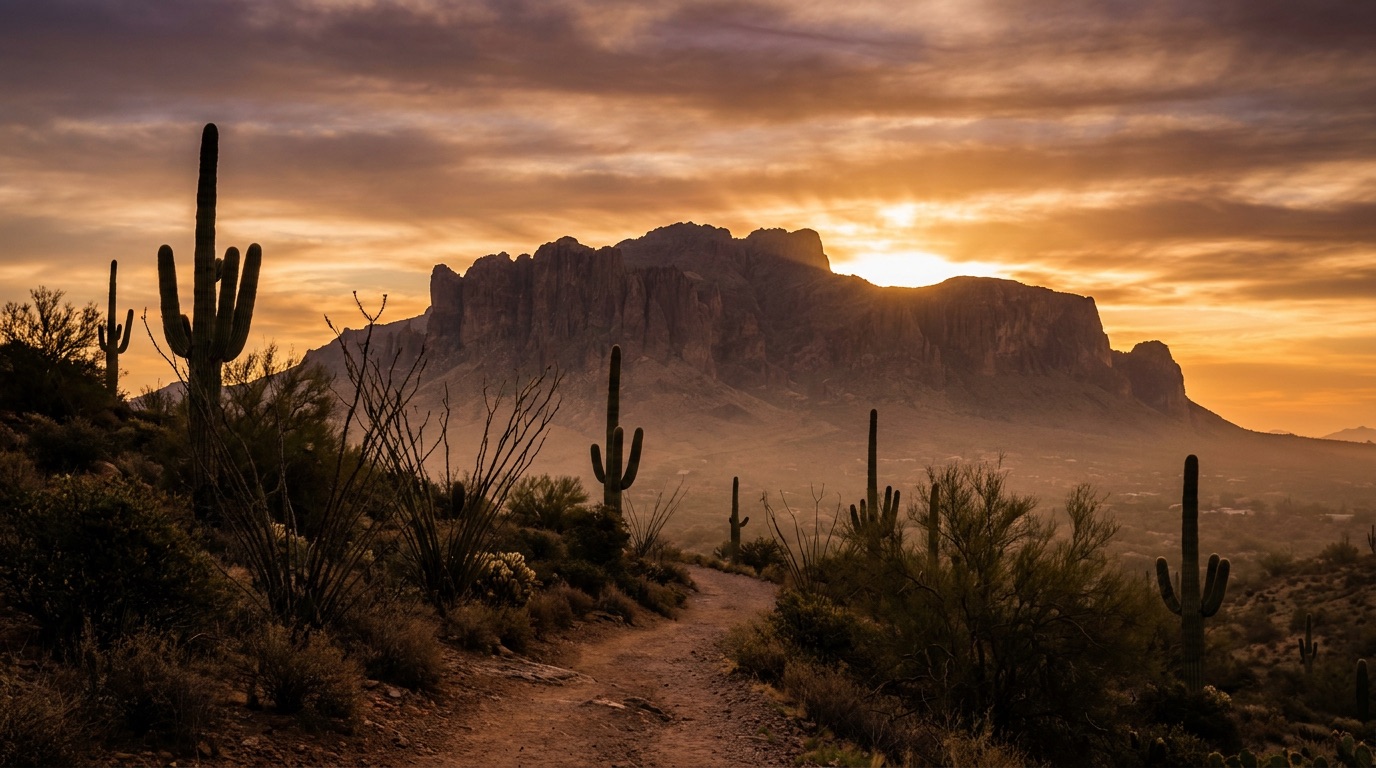
The people who struggle here are the ones who try to run the exact weekly schedule they had in Chicago or Seattle and conclude the city is unlivable. The people who love it are the ones who flip their clock in May and flip it back in October. That's genuinely the whole trick. Our guide to things to do in Phoenix this summer is built entirely around that timing logic, and the best easy hikes in Phoenix covers which trails still work in the hot months.
Your first summer, and what it actually costs you
Two bills surprise everyone.
Electricity. Your July and August bills will be the largest of the year, often dramatically so, because your AC essentially never stops. Here is the specific thing to do about it that nobody tells newcomers: before you sign a lease or close on a house, ask for twelve months of actual utility history for that address. Landlords and sellers can usually get it, and a summer bill is a real number that tells you more about a building's insulation, windows, and AC age than any listing photo will. A house that's cheap in March and brutal in July is a very common trap.
Your car. Heat is hard on vehicles in ways that catch people off guard. Batteries fail faster here than in cold climates, tires and windshield seals age quickly, and anything left on a dashboard in July is a loss. A folding sunshade is not a novelty item, it's standard equipment, and covered parking becomes something you will genuinely pay extra for. Shade is a currency in this city.
The Arizona quirks that catch everyone
We don't change the clocks. Arizona doesn't observe daylight saving time. In practice this means Phoenix matches Pacific time in the summer and Mountain time in the winter, so your standing calls with people on the coasts quietly shift by an hour twice a year while your own clock never moves. It confuses every new arrival for about six months.
Monsoon season is a real season. It runs June 15 through September 30 — fixed calendar dates, not a forecast. It brings dust storms, microbursts that take down trees and power lines, and flash flooding in washes that are bone dry ninety minutes earlier. It's the most destructive weather the Valley gets and almost all of the damage is preventable, which is why we wrote a full Phoenix monsoon season guide.
The desert is not allergy-free. People move here for their sinuses and are then furious about it. The Valley is heavily planted with non-native trees and grasses, and the pollen is real enough that olive and mulberry planting has been restricted here for decades precisely because of it. Bring your medication and don't assume the desert cured you.
Scorpions exist. Bark scorpions are native to the Valley and they turn up in garages, block walls, and occasionally houses. It's not a crisis and it's not everywhere, but seal your door sweeps and exterior gaps, and know that a UV flashlight is the standard local diagnostic tool. Most long-time residents have a story and no injuries.
Three pros to find before you need them
This is the most useful thing on this page, and it's the part only a local would think to tell you.
In most cities, you find a contractor when something breaks. That doesn't work here, because in Phoenix everything breaks the same week. The first 115-degree stretch of the summer takes out hundreds of tired AC systems on the same afternoon, and the first serious monsoon storm damages hundreds of roofs in the same hour. If your first call to an HVAC company is the day yours dies, you're joining a queue behind everyone else in the Valley — in a house that's getting hotter.
So do this in your first month, while nothing is wrong:
An HVAC company. Get a maintenance visit on the system you inherited, whatever its age. You'll learn how much life it has left, and you'll be an existing customer rather than a cold caller in July. How to choose an HVAC company in Phoenix covers what to ask.
A roofer. Phoenix roofs — especially tile — take relentless UV and then get hit by monsoon wind. Getting one looked at in spring is cheap; finding out in August is a ceiling stain and a claim. See how to choose a roofer in Phoenix.
A general home-service pro you trust. Plumbing, electrical, handyman work — whoever it is, vet them once, properly, and keep the number. In Arizona that means verifying the license with the Registrar of Contractors, getting scope and price in writing, and never paying a job in full up front. Our guide to vetting a home service pro in Arizona is the full checklist, and it matters most right after a storm, when out-of-state crews go door to door.
Choosing where to live: what the map doesn't tell you
The Valley of the Sun is not one city. It's a wide grid of them — Phoenix, Scottsdale, Tempe, Mesa, Chandler, Gilbert, Glendale, Peoria, Ahwatukee and more — and they feel genuinely different from each other in ways a map will never show you.
A few honest planning notes:
Pick for your commute and your weekend, not for the house. The Valley is wide and flat, and the freeway loops do the heavy lifting. Twenty miles can be twenty-five minutes or an hour depending entirely on direction and time of day. Drive your actual commute at your actual commute time before you commit to an address.
Mature trees are a real amenity. An older neighborhood with a grown tree canopy is measurably more pleasant in summer than a new build on bare ground. It sounds like a small thing in a photo. It is not a small thing in June.
A pool is a lifestyle and a line item. Plenty of Valley homes have one, and in summer it earns its keep. It also needs chemicals, equipment, power, and either your Saturdays or a service. Decide which you're signing up for.
Rent through one summer before you buy. This is the advice most locals give and most newcomers skip. One July teaches you more about which part of the Valley suits you than a year of research will.
To get a feel for the character differences, our local's guide to Arcadia, a perfect day in Old Town Scottsdale, and the Roosevelt Row and First Fridays guide are three very different Phoenixes in three short reads.
The part the listicles undersell

It's easy to write a moving guide that reads like a warning label, so here's the correction: the trade is worth it, and most people who make it here don't leave.
You get six months of weather other cities would sell organs for. You get real mountains inside the city limits — Camelback for the hard version, South Mountain for the mountaintop view you can drive to, Papago Park for the ninety-minute evening that feels like a whole outing. You get an airport unusually close to downtown, which quietly improves your life every time you travel. You get day trips to pine forest and red rock in under two hours. And you get sunsets that are genuinely, absurdly good, most nights, for free — here's where to watch them.
Your first 90 days, in order
Month one: Get the utility history if you didn't before signing. Book an AC maintenance visit. Buy the sunshade. Find your grocery store, your coffee place, and one restaurant patio you like — free things to do in Phoenix is a cheap way to cover a lot of ground fast.
Month two: Get the roof looked at and pick your home-service pro, verifying the license before anything else. Drive your commute at rush hour. Start learning which errands you're going to batch in summer.
Month three: If you arrived in the cool months, use them hard — that's what they're for. If you arrived in summer, be patient with the city and with yourself. October is coming and it changes everything.
Welcome. It's a better place to live than its reputation, and considerably weirder.
Know a Phoenix-area business that made your move easier — a mover, an HVAC crew, a realtor who told you the truth, a coffee shop that made a new city feel like home? Nominate them to be featured. The businesses locals actually recommend to friends are the only ones we write about.